Buty Obuwie

The AI boom is the first platform shift where there are ‘real advantages’ of building from Asia, says Antler’s founder and CEO Magnus Grimeland

· Fortune
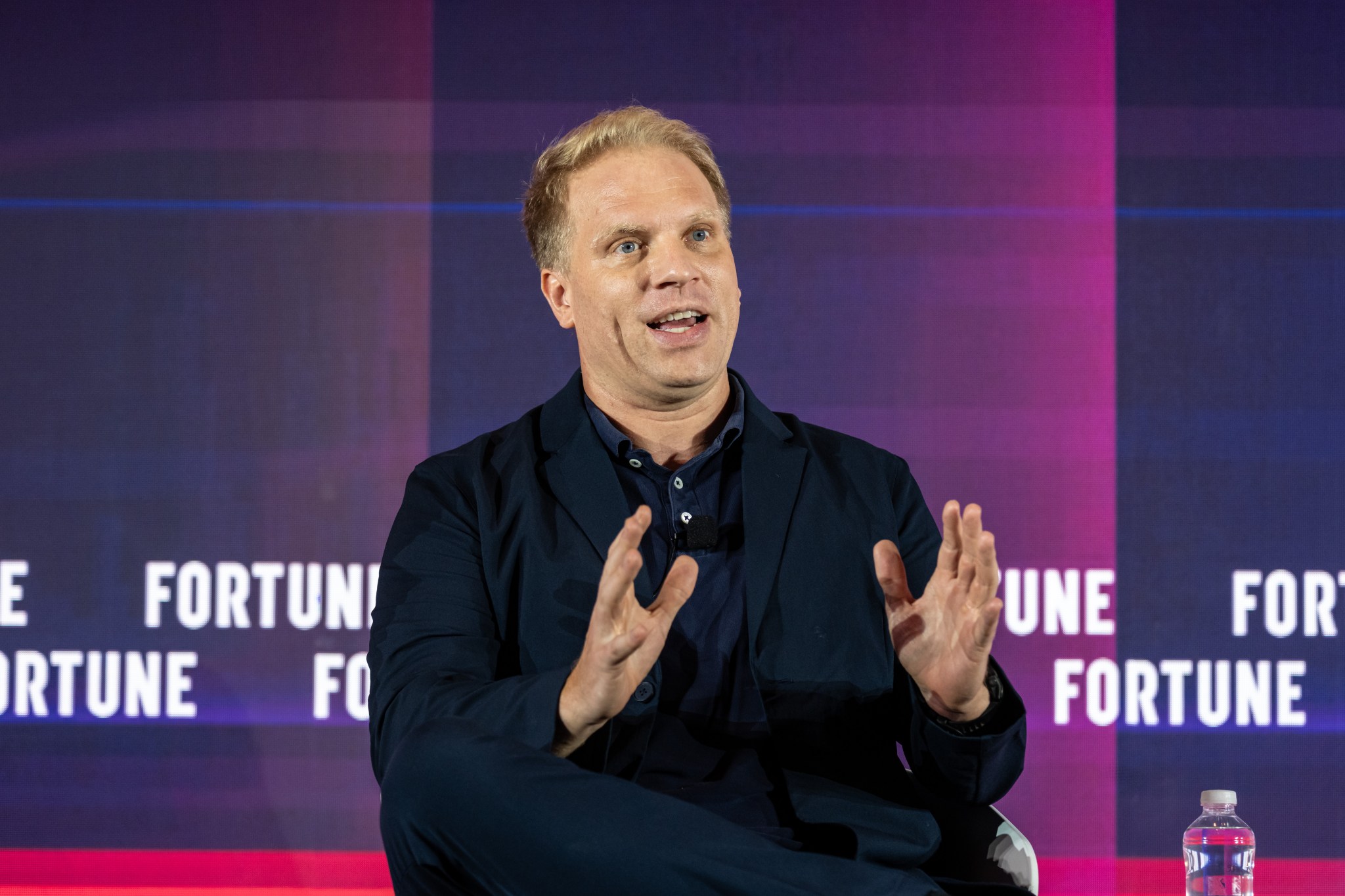
Despite its fragmented markets and myriad of cultures and spoken languages, Asia is becoming an increasingly popular home for budding tech and AI entrepreneurs, according to Magnus Grimeland, the founder and CEO of venture capital firm Antler.

“Going to the U.S. to build companies is still very popular and we see that happening at scale,” Grimeland said at the Fortune Southeast Asia 500 Summit in Vietnam on Nov. 3. “[But] for the first time ever in one of these platform shifts, there are real advantages in Asia that will lead to a lot of the leading companies being built out of here.”

Visit likesport.biz for more information.

According to Crunchbase data, investors poured $42.8 billion into startup funding rounds across all of Asia in the second quarter of 2026—the highest quarterly total in over three years. In Grimeland’s telling, several factors make Asia an appealing home for startups: a rapidly growing electricity grid, and an abundance of advanced chips and AI engineering talent.

“If you look at global power production, there’s four times more power being generated and built in Asia per year than in Europe and the U.S. combined,” he explained. “Most of that is in China, but [it’s happening] in the rest of Asia as well… the cost of power has gone down drastically compared to what you can access in the U.S..”

Asia, too, is leading in the physical AI realm. “All the leading companies in that space are here,” Grimeland said. “There’s very, very few autonomous vehicles on the streets in the U.S…. [but there’s] one company in China that has more autonomous vehicles on the streets than the rest of the world combined.”

Uneven growth

Yet, the allocation of venture funding remains hugely uneven within Asia. Thus far in 2026, 68.1%—or $96.1 billion of $141 billion—of VC funds entering Asia flowed into China, mainly to AI startups such as DeepSeek, Moonshot AI and StepFun, according to Dealroom data. By contrast, only $10.7 billion of venture funding went to Southeast Asia during the first nine months of the year.

“I get this question all the time: “What kinds of AI deals are you seeing in the Philippines?”” said Franco Varona, managing partner at Foxmont Capital Partners, a Philippines-based early growth fund. “[But] we don’t have the infrastructure for an LLM developer. We don’t even have the infrastructure for AI apps to be developed in the Philippines.”

Varona, a Canada-born Filipino, argued that this environment creates different investment opportunities. “In developed markets, you can already benefit from the infrastructure which has been developed, and you can invest in innovators, because those innovators have everything around them that can help them out,” Varona said. “[But] when we think about investing in an emerging market like the Philippines, we think about it as investing in the infrastructure itself.” 

To date, Foxmont has launched several themed funds, including one on digitization in the Philippines, and another focused on accessibility and affordability for Filipino consumers.

The unique corporate dynamic in Asia has also pushed the region’s long-running venture firms to launch new funding models. Singapore-headquartered VC firm Granite Asia’s private credit fund Libra Hybrid, for example, combines the characteristics of both debt and equity into a single financial instrument. 

“A lot of businesses [in Asia] are family owned or part of conglomerates,” said Ming Eng, Granite Asia’s managing partner. “They may not be interested in dilution or going for an IPO at any point in time… but they still need strategic capital to help them grow, and that’s where we see a lot of opportunities to help founders and companies, [by] having a different form of capital other than [pure] equity.”

All three panelists remained bullish on Asia’s VC scene, despite recent geopolitical headwinds. “We are going into a world now where the balance of innovation is clearly shifting,” concluded Grimeland of Antler. “There’s a real chance that more than the majority of the most exciting and innovative companies in [the AI] space will have been built out of Asia, and that has never happened before.”

This story was originally featured on Fortune.com
Czytaj dalej u źródła

Boy George sparks delight in Israel as rare international pop performer

· Citizen

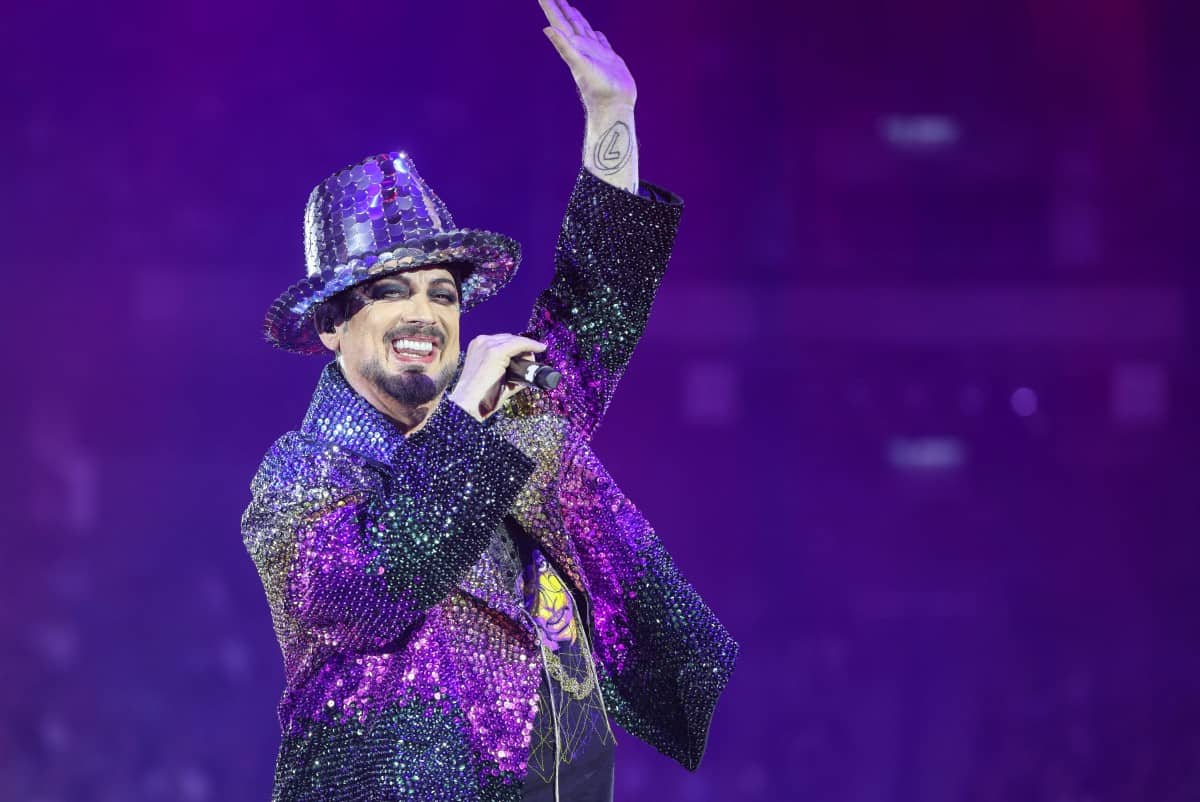
When cheers erupted at a packed Tel Aviv stadium for Boy George, it was not only a sign of the 65-year-old singer’s enduring fame. In fact, it was the sound of national delight at an international pop star willing to perform in an increasingly isolated Israel.

A smattering of Israeli flags dotted the crowd as the flamboyant Culture Club frontman took the stage in a sequined jacket for Wednesday’s sold-out performance. He greeted the crowd with a simple “Shalom!”

Visit h-doctor.club for more information.

The British singer is one of the few international artists to have defied calls for a cultural boycott of Israel. These calls have intensified over its military offensive in Gaza since Hamas’s 7 October 2023 attack.

“Culturally speaking, he is the most amazing thing that has ever happened to us,” Nachum, a Boy George fan for more than 40 years, told AFP as he prepared to enter the arena.

“I’d even call him a hero, especially considering the courage he showed in coming here, despite receiving a great many threats.”

Boy George’s vocal support of Israel came to the fore in July, when he released a song titled We Will Dance Again. The lyrics offer solidarity with the victims of 7 October and support for Israel’s campaign in Gaza.

The reggae-infused song, which starts with the lyrics: “You say genocide, I say war”, has triggered widespread backlash. As a result, Boy George dropped out of a West End musical.

But on Wednesday in Tel Aviv, the biggest applause of the night came during that song. Huge cheers erupted as the star sang: “If you’re ever confused, I stand with the Jews.”

Addressing the stadium during a musical interlude, Boy George told supporters to “show the world that hate is far less fun than love”.

“He’s really brave, really brave to stand out for us,” said Merav, a fan whose friends had come to the show decked out in Boy George merchandise.

“Especially nowadays when people are afraid to support Israel, when all the propaganda is against us, he’s standing for us, and I think it’s something we should all really appreciate.”

‘Old Boy George no longer exists’

7 October 2023 was the deadliest day in Israel’s history. On that day, Palestinian fighters breached the Gaza border and stormed southern Israel with gunfire, rockets and grenades.

The attack resulted in the deaths of 1 221 people, according to an AFP tally based on official Israeli figures. Additionally, militants dragged 251 hostages into Gaza.

It triggered a massive Israeli military offensive that has left Gaza in ruins and killed more than 74 500 people, according to Gaza’s health ministry. This ministry is under Hamas authority and its figures are considered reliable by the United Nations.

Few international artists have performed in Israel since then, with support seen as increasingly taboo.

Last year saw the launch of a music collective called “No Music for Genocide”. Artists including Bjork and Massive Attack sought to block the streaming of their songs in Israel.

A campaign to boycott Israel, known as the Boycott, Divestment and Sanctions (BDS) movement, began 20 years ago over the country’s occupation of Palestinian territory. The Israeli government accuses its supporters of being antisemitic, charges they deny.

In September, BDS published a call by a pro-Palestinian group for a boycott of British pop star Ed Sheeran’s world tour. This followed after US rapper Macklemore was dropped as a supporting act over pro-Palestinian comments.

During his visit to the country, Boy George acknowledged the pressures he had faced over his pro-Israel stance.

“In some ways, the old Boy George no longer exists, because some people don’t see me in the way they used to, and a lot of other people see me in a new way,” he said while meeting President Isaac Herzog.

The LGBTQ trailblazer, whose real name is George O’Dowd, has often spoken of feeling a kinship with the Jewish community around which he grew up in London.

On Tuesday, he visited the site of the Nova music festival. There, Hamas-led militants killed more than 360 revellers on 7 October.

Boy George said the tragedy inspired him to write his latest song. He is due to perform another Tel Aviv concert on Saturday, with 1 500 tickets donated to survivors and bereaved families.

Czytaj dalej u źródła

First steps in bare-metal programming using UEFI

· Hacker News