Buty Obuwie

McConnell keen to emulate O'Connor's Euro heroics

· Yahoo Sports

McConnell won the Commonwealth Games 70kg title in July [Getty Images]

Commonwealth Games gold medallist Jon McConnell took note of how Kate O'Connor built on her glory in Glasgow to conquer Europe and has aspirations to do likewise.

Heptathlete O'Connor won Commonwealth gold in July and followed up with European success in Birmingham just weeks later. Belfast's McConnell - who took the 70kg title in Glasgow - now sets his sights on the European Elite Championships which begin on Thursday in Sofia, Bulgaria.

Visit h-doctor.club for more information.

The 23-year-old made the big breakthrough in Glasgow, claiming Team NI's only boxing gold, but is not content to bask in his summer glory with the opportunity to build upon that momentum and emulate O'Connor's double.

"She is a big inspiration, winning the Commonwealths, had a week off and was back over in Birmingham to win [European] gold - hopefully I can replicate that," McConnell told BBC Sport NI in the build-up to his trip to Bulgaria.

"I'm on the right road. The Commonwealths was a goal for me since I was a kid. It's given me a taste for more and the only way to get that buzz is to go out and win major championships."

McConnell is part of a 14-strong Team Ireland squad preparing for action in Sofia that now includes Kellie McLoughlin at women's lightweight as two-time Olympic champion Kellie Harrington withdrew due to a hand injury.

While medals remain a coveted currency in any tournament, there is also an opportunity to test themselves against their rivals before qualifying for the 2028 Olympic Games in Los Angeles begins next year with the World Championships and European Games.

"It's going to be the same people you are boxing," McConnell noted.

"I take one fight and round at a time, but there is no reason why I can't be top of the podium as LA is my main goal.

"I'm national elite champion two years in a row, so if I can make that three in January, I should go to the qualifiers next year, but these European Championships I want to put a marker down."

Coach Kennedy happy with progress

Kennedy feels there are some Irish males ready to make the breakthrough after females brought all four medals home from the 2024 European Championships [Getty Images]

Ireland returned from the previous European Championships in 2024, held in Serbia, with two gold and two bronze medals - all won by females including current team members Shannon Sweeney [50kg gold, now at 48kg] and Aoife O'Rourke [75kg gold].

In Yerevan two years prior, Gabriel Dossen claimed gold and Dylan Eagleson took silver, but it has been nine years since Ireland's men took a medal at the World Championships with Joe Ward's silver and a further two from Michael Conlan becoming the only male to win a world gold.

Current interim head coach Damian Kennedy is confident there can be some new male stars emerge over the coming years and has noted their "progression since the start of January".

"Dean Clancy is going three fights deep into competitions on a regular basis, Jude Gallagher is going deep on a regular basis, Jack Marley is boxing the best I've ever seen him," Kennedy said.

"Sometimes success is measured in medals but that's not always the case as I've seen the progression here.

"There are a number of athletes about to tip over the edge and when the floodgates open for the males, it will be amazing to watch."

'I'm not a baby anymore' - Gallagher

Gallagher - a 2024 Olympian - was unable to make it back-to-back Commonwealth golds in Glasgow when eliminated at the semi-final stage by Nambia's Tryagain Ndevelo, leaving him with bronze to add to the featherweight title he won four years prior.

The Newtownstewart man remains something of an established figure on the international scene, but the 24-year-old wants to "start making my mark at international level now as I'm not a baby anymore" when looking ahead to the European Championships.

"These European Championships are very important coming into the cycle next year to qualify for LA," he agreed.

"You'll get to look at potential opponents you will face in qualifiers next season but also a good opportunity to lay down a marker and see where you are at and what you have to work on.

"It would be a massive confidence-boost [to medal] to know you're sitting among the best in Europe."

Michaela Walsh has already collected one silver and three bronze medals on the European stage [Getty Images]

Michaela Walsh also fell short of retaining her 57kg Commonwealth title in Glasgow, beaten in the final by world champion Jaismine Lamboria, but it has been a productive year to date with a silver also secured at the Strandja Tournament.

The 33-year-old two-time Olympian has consistently proven herself European scene with three bronze and one silver medal already collected and while she continues to insist "a medal will never define me", that is not to be mistaken for a lack of ambition before this tournament and the countdown to the 2028 Olympics.

"This year I got to finals and have boxed top opposition including the Commonwealth Games against current world champion at my weight," the Belfast woman said.

"I have got experience there, so going to the Europeans, I do want to be on top of the podium but especially in the lead-up to LA, I want to be in with the top girls to have a looks at where I need to grow or work on.

"I've good momentum going into these Europeans with great team-mates around me. Seeing others do well drives you on."

Team Ireland

Shannon Sweeney (St Anne's BC, Mayo) Women's 48kg

Daina Moorehouse (Enniskerry BC, Wicklow) Women's 51kg

Jennifer Lehane (DCU BC, Dublin) Women's 54kg

Michaela Walsh (Holy Family BC, Belfast) Women's 57kg

Kellie McLoughlin (St Catherine's BC, Dublin) Women's 60kg

Jude Gallagher (Two Castles Olympic, Tyrone) Men's 60kg

Dean Clancy (Sean McDermott BC, Leitrim) Men's 65kg

Evelyn Igharo (Clann Naofa BC, Louth) Women's 70kg

Jon McConnell (Holy Trinity BC, Belfast) Men's 70kg

Aoife O'Rourke (Castlerea BC, Roscommon) Women's 75kg

Gavin Rafferty (Dublin Docklands BC) Men's 75kg

Lisa O'Rourke (Castlerea BC, Roscommon) Women's 80kg

Cliona D'Arcy (Tobair Pheadair BC, Galway) Women's 80+kg

More boxing from the BBC

Czytaj dalej u źródła

Arrangements I Would Accept

· New Yorker

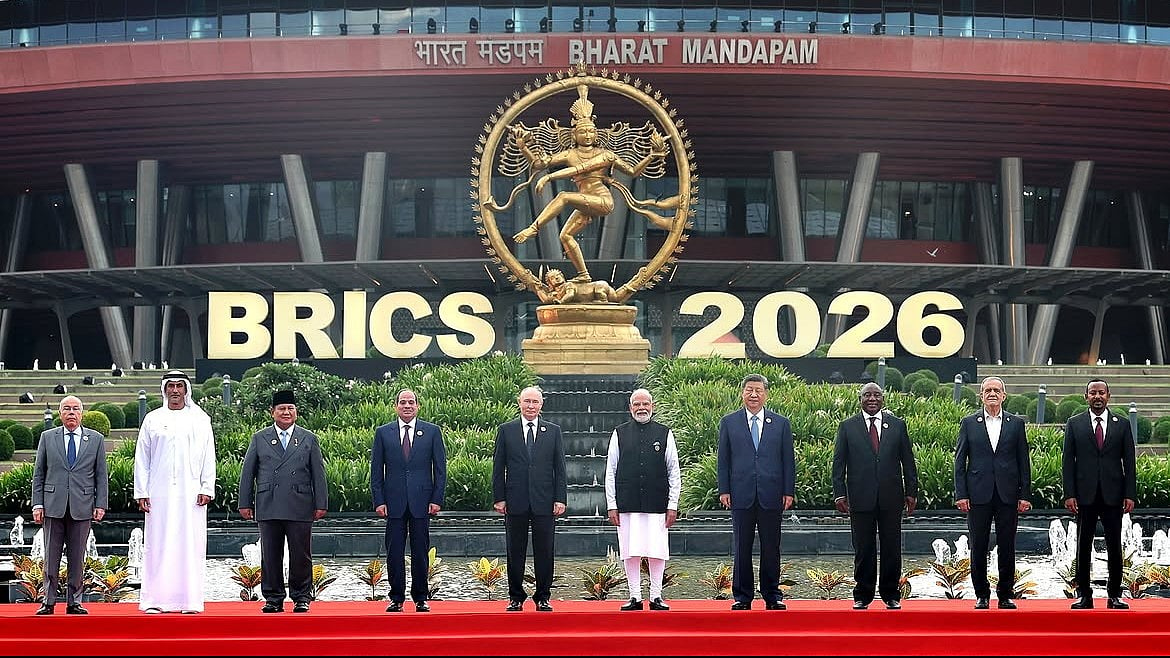
The War In West Asia In The Aftermath Of The New Delhi Summit

· Free Press Journal

The war in West Asia rages on as Saudi fighter jets pound Houthi positions. This despite a meeting on the sidelines of the New Delhi BRICS Summit, the first of its kind since the war started in February this year between the Iranian President and the Abu Dhabi Crown Prince in what was seen as an attempt to bring about a breakthrough.

Visit rouesnews.click for more information.

However, the follow-up meeting on Monday, where the Iranians were supposed to unveil their plan for a safe transit corridor through the Strait of Hormuz, seems to have been overtaken by the war in Yemen, where the success of the Iran-backed Houthi rebels has worried Saudi Arabia to no end. The Houthis have taken charge of the mouth of the Red Sea even as missiles fired from Iraq have damaged the Saudi East-West pipeline, crippling evacuation of the oil-rich kingdom’s natural resources.

Be that as may be, the tentative steps taken by the ‘dove of peace’ set loose at Delhi may still be able to fly if cooler heads were to sit down and work towards that goal.

The most revealing moment of the BRICS Summit in New Delhi may have come after the leaders had finished talking. Let’s look at what exactly happened last week, which gives some hope for the grim situation in West Asia, which has seen stock markets and currencies collapsing, energy crises erupting, and factories shutting down across the globe.

BRICS And Diplomatic Reach

BRICS by itself cannot stop the war. It has no ceasefire mechanism, peacekeeping force or authority to compel Iran, the US or their partners to halt hostilities. Nor can it guarantee the security of shipping through Hormuz or the Red Sea.

However, the expanded 11-member grouping has something more useful at this stage—diplomatic reach. The grouping brings together major energy producers and consumers, including countries with close relationships with Iran, the Gulf states, Russia, China, and India. Its members have little agreement on the wider geopolitical order, but they share an immediate interest in preventing a regional war from becoming a global economic shock.

Which is why the members unanimously expressed deep concern over the conflict, called for maximum restraint, and condemned attacks on civilian infrastructure and peaceful nuclear facilities under IAEA safeguards, while stressing nuclear safety and security.

India, Russia, and China also perhaps helped steer the interesting bit of diplomacy which saw Iranian President Masoud Pezeshkian meeting Sheikh Khaled bin Mohamed Al Nahyan, Crown Prince of Abu Dhabi, on the sidelines of the gathering.

Tehran And Gulf Capitals Talk

Saudi Arabia was represented by its foreign minister at the BRICS Summit, and notes must have made their way on what was transpiring even as the two sat down. There was no public announcement of breakthroughs, but the encounters demonstrated something important: Tehran and the Gulf capitals can still talk directly even as the wider confrontation continues.

BRICS did, as it should, resist the temptation to present itself as a mediator. Its comparative advantage lies elsewhere—as an umbrella under which several channels of diplomacy can operate simultaneously.

The ‘Big Three’ in the BRICS grouping—India, Russia, and China—have one immediate objective, which is to protect commercial shipping, energy infrastructure, and civilian and nuclear facilities. That is where the reported discussions over a temporary shipping arrangement through the Strait of Hormuz become significant.

Hormuz Corridor Under Discussion

A limited corridor would not amount to a reopening of Hormuz in the normal sense. Iranian foreign minister Abbas Araghchi has indicated that any temporary arrangement should not be confused with full reopening, with Tehran linking normal transit to wider political understandings with Washington.

The question is no longer simply whether Hormuz is open or closed, but whether it can be placed under some form of managed access while the political confrontation continues. That would be crisis management, not peace-making, but crisis management is precisely what markets need.

The economic stakes are enormous. Hormuz is one of the world's most important energy arteries, while the Red Sea and Suez Canal form a parallel route for global trade. Disruption raises oil, freight, insurance, and import costs, feeding directly into inflation. A prolonged or simultaneous disruption of both routes could produce a global shock far beyond West Asia.

India And China’s Role

India and China need dependable energy supplies and trade routes. Gulf producers need their export infrastructure protected. The unavailability of either is feeding a global crisis. As it is, the benchmark Brent crude price has risen from $73 in February, just before the war broke out, to $107 on Monday morning, while the Sensex has fallen by 1,473 points in the last five days, while the Shanghai Composite Index has fallen by over 2 per cent.

China possibly has the greatest potential leverage because of its close military and economic ties with Tehran while also enjoying deep relationships with the Gulf monarchies, and it played a central role in restoring diplomatic relations between Saudi Arabia and Iran. That gives Beijing a possible channel into conversations that other powers may find difficult to open.

While India has less leverage in Tehran than China, its relationships are unusually broad. New Delhi also has strategic partnerships with the UAE and Saudi Arabia, retains important ties with Iran, and is deepening its relationship with Washington. And it can play a potential bridge role.

Informal Division Of Labour

This suggests an informal division of diplomatic labour rather than a single BRICS peace process: China can help connect Tehran and Washington; India can work across its Gulf and Iranian relationships, while the UAE and other regional actors can handle the technical details of any shipping or de-escalation arrangements.

New Delhi has shown that BRICS can get regional actors to agree, at least for now, on the need for restraint. The harder task will be converting that consensus into practice and, thereby, keeping the ships moving, the oil flowing, and, eventually, creating the conditions in which the guns can fall silent.

The writer is Editor, United News of India.

Czytaj dalej u źródła